Wine Pairing vs Wine Maridaje : Europe vs Napa
Explore wine pairing vs wine maridaje in Europe and Napa, from small bites to full culinary experiences shaped by culture and history.
Date: 03/04/2026
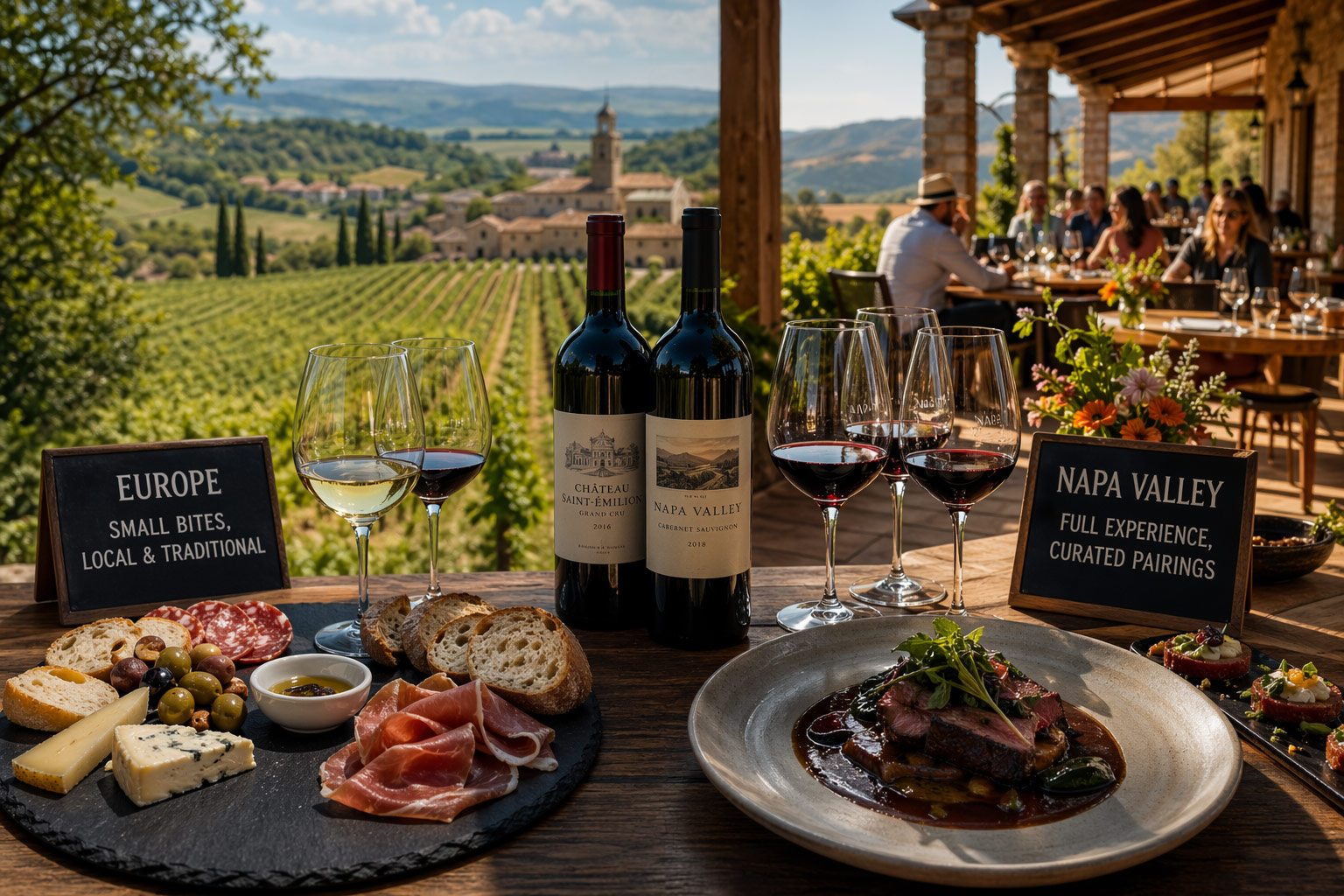
Wine is more than a beverage. It is a cultural experience shaped by history, geography, and lifestyle. One of the most interesting contrasts in the wine world is how food is presented alongside wine in Europe compared to Napa Valley in the United States. While both regions celebrate the connection between wine and food, the approach is fundamentally different.
The Concept of Wine Pairing and Wine Maridaje
Wine pairing refers to the practice of matching wine with food to enhance flavors. Wine maridaje, a term widely used in Spanish-speaking wine cultures, emphasizes harmony and balance, where wine and food come together as one unified experience rather than two separate elements.
In Europe, maridaje is often intuitive and based on regional traditions. In Napa Valley, pairing tends to be more structured, often designed by chefs and sommeliers to create a curated experience.
Europe: Small Bites and Natural Harmony
In Europe, wineries were established centuries ago, long before modern tourism. Vineyards in France, Italy, and Spain became part of daily life, with towns naturally forming around them. This proximity shaped how wine is consumed and enjoyed.
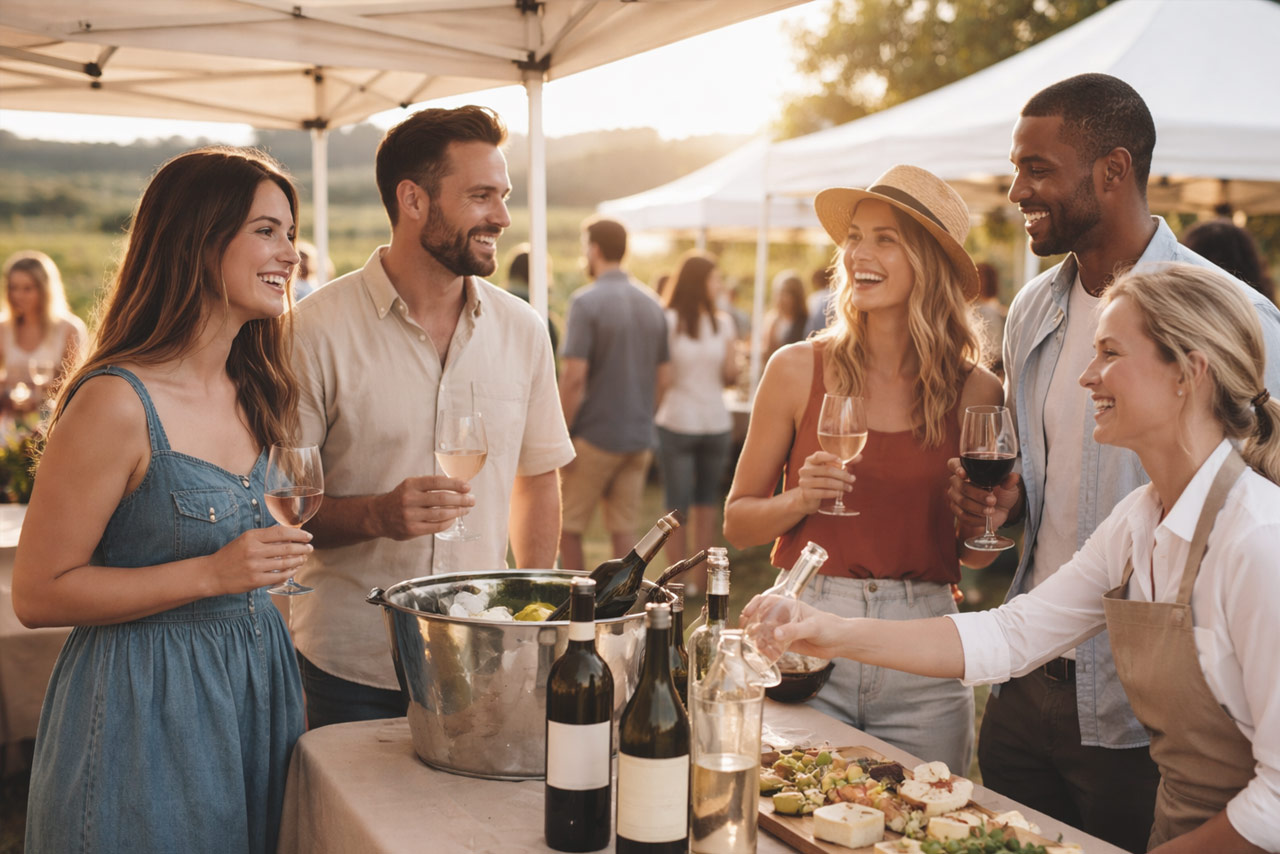
European wineries typically offer small bites such as cheese, cured meats, olives, and bread. These are not meant to replace a meal but to highlight the wine's character and local identity.
- Wine remains the primary focus
- Food is simple, local, and seasonal
- Experiences are less commercial and more cultural
- Meals are enjoyed in nearby villages and restaurants
This approach reflects a philosophy of authenticity. Wine is part of everyday life, not just a curated experience for visitors.
Napa Valley: Full Culinary Experiences
Napa Valley represents a newer wine culture shaped by tourism and hospitality. Many wineries are located in areas where restaurants are not easily accessible, which has influenced the need for on-site dining experiences.
As a result, Napa wineries often provide full meals, guided tastings, and high-end food pairings designed to elevate both the wine and the visitor experience.
- Multi-course tasting menus are common
- Food and wine are designed together intentionally
- Wineries function as destination venues
- Hospitality is highly curated and premium-driven
This model aligns with visitor expectations in the United States, where convenience and complete experiences are highly valued.
Terroir and Regional Identity in Pairing
One of the most important differences is the role of terroir. In Europe, wine and food are deeply connected to the land. Local dishes evolved alongside local wines, creating natural pairings over generations.
For example, a wine from a coastal region is often paired with seafood from the same area, while wines from mountainous regions are matched with hearty meats and aged cheeses. This creates an organic form of maridaje that feels effortless and authentic.
In Napa Valley, terroir still matters, but pairings are often more experimental. Chefs may introduce global cuisines and modern techniques, creating innovative combinations that go beyond regional traditions.
Regulations and Licensing Differences
Another key factor is regulation. In many European countries, strict laws historically limited food service at wineries, reinforcing the tradition of offering only small bites.
In Napa Valley, wineries operate under different licensing structures that often allow or even encourage full food service. This regulatory flexibility has contributed to the rise of winery restaurants and culinary programs.
Tourism and Experience Design
Tourism plays a significant role in shaping these differences. European wine regions were not originally built for tourism, so the experience remains more organic and less structured.
Napa Valley, on the other hand, was developed with tourism in mind. Wineries are designed to provide memorable, high-end experiences that combine wine, food, architecture, and service.
- Europe offers a slower, more exploratory experience
- Napa provides a polished, planned journey
- European visits are often spontaneous
- Napa visits are usually reservation-based
Social Culture Around Wine
In Europe, wine is part of everyday social life. It is common to enjoy wine casually with meals, without the need for formal tastings or structured pairings.
In the United States, wine tasting is more of an event. Visitors plan their trips, book tastings, and expect an educational and curated experience. This difference influences how food is integrated into the winery visit.
What This Means for Visitors
When visiting European wineries, it is important to embrace simplicity. Focus on the wine, enjoy light local foods, and plan to explore nearby towns for full meals.
In Napa Valley, visitors can expect a complete experience in one place. Wineries often combine tasting, dining, and relaxation into a single visit, making it convenient and immersive.
Which Experience Is Better?
Both approaches offer unique value. Europe delivers authenticity, tradition, and a deep connection to place. Napa Valley offers convenience, innovation, and elevated hospitality.
From a strategic perspective, Napa has successfully adapted wine culture to modern tourism, while Europe has preserved its historical identity. Both models are effective, but they serve different expectations.
Final Thoughts
Wine pairing and wine maridaje are influenced by history, geography, regulation, and culture. Whether enjoying simple bites in a European vineyard or a full culinary experience in Napa Valley, both approaches celebrate the connection between wine and food.
The most valuable insight is this: great wine experiences are not defined by complexity, but by balance, authenticity, and the environment in which they are enjoyed.
For more information about wine events and wine traveling experiences please visit our other website sections:
Researchers: VinoFestivals Team
Latest Wine Articles
Explore curated articles covering wine festivals, iconic wine regions, tasting experiences, and the evolving world of global wine culture.